
Closing a Dubai mainland company is a formal process, not a decision to stop renewing. It requires a shareholder resolution, a licensed liquidator, a newspaper notice, an objection period, clearances from several authorities and tax deregistration — and it cannot complete while returns remain unfiled.
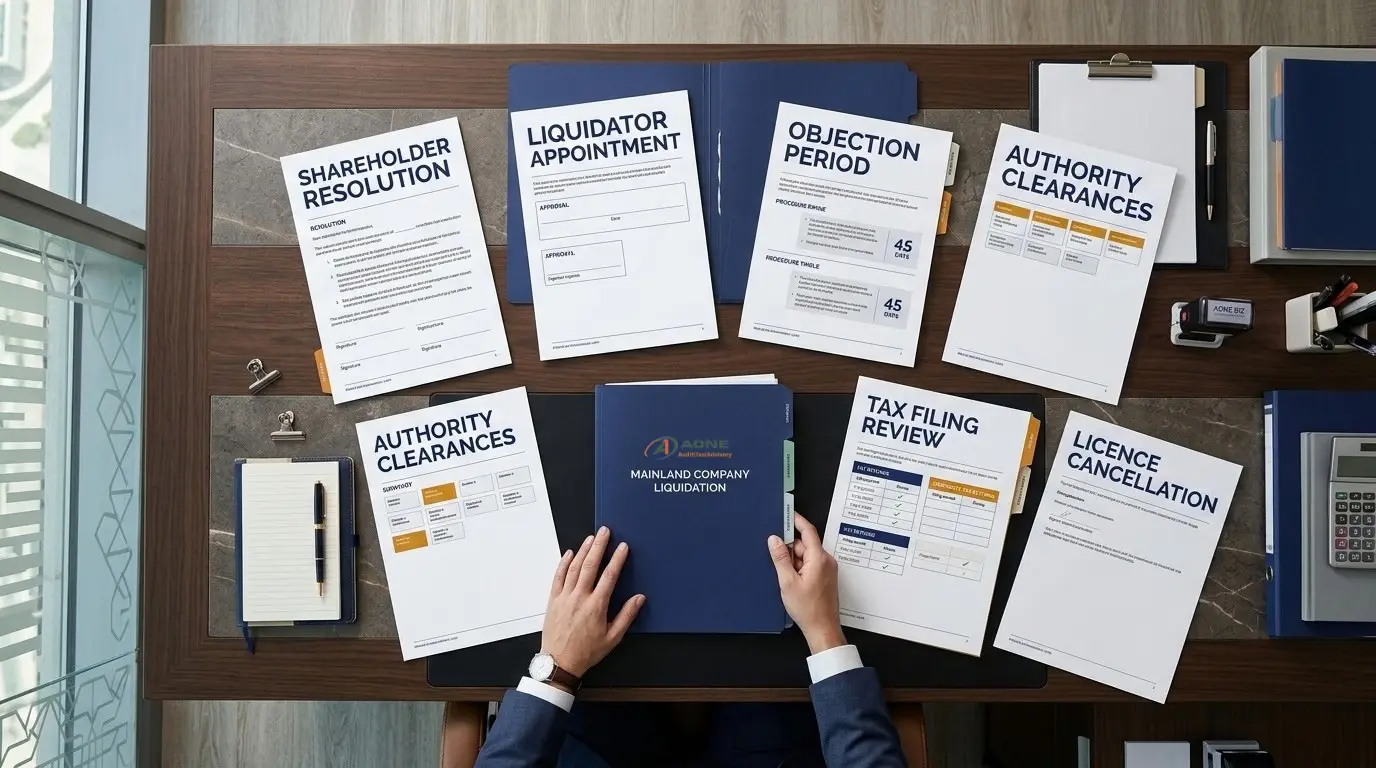
The mainland company liquidation process in order
- Shareholder resolution to dissolve, notarised
- Appoint a liquidator — a licensed audit firm that will issue the liquidation report
- Initial approval from the Department of Economy and Tourism
- Newspaper notice and a statutory objection period for creditors
- Cancel visas and settle end of service entitlements
- Clearances — immigration, MOHRE, utilities, telecoms, customs, landlord
- Tax deregistration — VAT and corporate tax, with final returns
- Close bank accounts once liabilities are settled
- Final deregistration and licence cancellation certificate
Unfiled history controls everything
You cannot deregister for VAT or corporate tax with outstanding returns. A company that stopped trading two years ago but never filed cannot simply close — the missing years have to be prepared first.
This is the single biggest determinant of how long liquidation takes. With clean filings, two to four months is realistic. With two years of unfiled returns and no maintained records, budget considerably longer — the work starts with backlog accounting recovery before liquidation can even begin.
Anyone quoting you a liquidation timeline without asking about filing history is quoting the best case.
What makes mainland different
Mainland liquidation involves more counterparties than free zone closure. The Department of Economy and Tourism, MOHRE for the labour file, immigration for visas, the landlord for Ejari cancellation, and utilities each require separate clearance.
Where a Local Service Agent arrangement exists, that relationship must be formally terminated. Where the company holds a physical tenancy, Ejari cancellation and a landlord clearance letter are required before the licence can be cancelled — and a dispute over dilapidations can hold the whole process.
Employees come first, practically
Visa cancellation cannot proceed until end of service entitlements are settled, and immigration clearance cannot be obtained until visas are cancelled.
That makes employee settlement an early step rather than a late one. Gratuity, accrued leave encashment and notice all fall due — and companies that never accrued gratuity monthly discover the full liability at exactly the point they are trying to wind down. See end of service gratuity for the calculation.
Why abandoning the licence is worse
Letting the licence lapse does not close the company. Penalties accrue, the entity remains unresolved, and directors and shareholders stay associated with it.
The practical consequences follow you: difficulty obtaining new licences or visas, banking complications, and unfiled corporate tax returns that do not disappear with the trade licence. Proper liquidation almost always costs less than the accumulated position of an abandoned entity several years later.
What it costs
Liquidator fee, authority cancellation fees, newspaper publication, and any outstanding liabilities. The variable that moves the total is unfiled history — missing returns or unaudited years have to be brought current, and that work is priced on the state of the records rather than on the closure itself.
We quote after seeing the filing history, because a blind quote on liquidation is a guess that gets revised.
Frequently asked questions
Two to four months with clean filings. Considerably longer where returns are outstanding, since deregistration cannot proceed without them.
Yes. A licensed audit firm must be appointed and issues the liquidation report the authority requires.
Liabilities must be settled or formally addressed. The newspaper notice and objection period exist for creditors.
The licence lapses with penalties accruing, but the company is not closed. Directors remain associated with an unresolved entity.
Yes, for mainland companies with a physical tenancy. A landlord clearance letter is required before licence cancellation.
Visas cannot be cancelled until end of service entitlements are settled, and immigration clearance follows visa cancellation - so settle early.
Getting started
Tell us your last filed return and whether any employees remain. Those two answers determine the timeline more than anything else about the closure.